
Orders arrive separately
Phone, counter and online orders each follow their own process.
Guests order on your restaurant website for collection or delivery. Connected delivery services or your own drivers handle delivery.
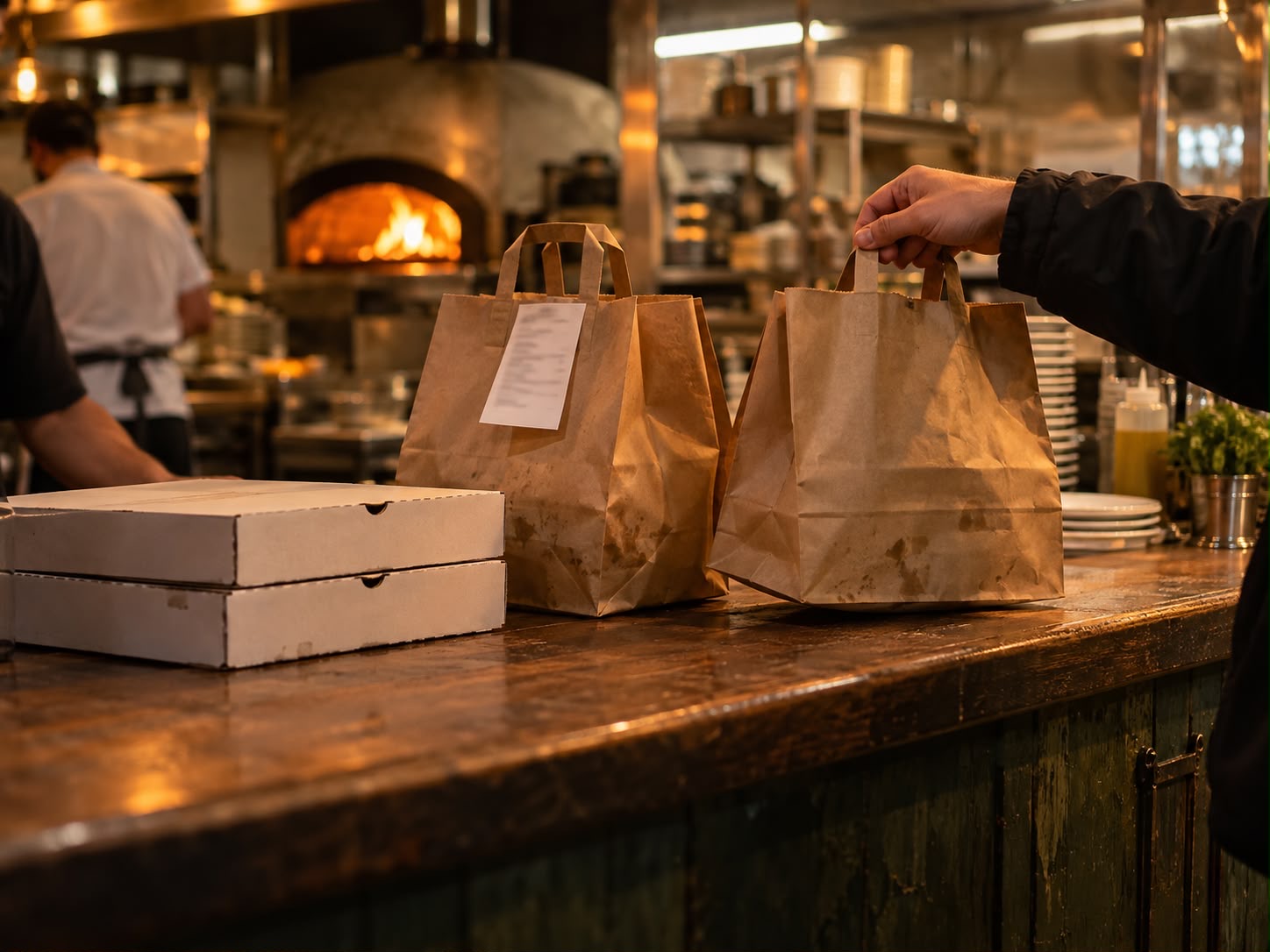 Example · generated image
Phone, counter and online orders each follow their own process.
Your team retypes orders or passes them verbally to the kitchen.
For every delivery order, it must be clear who will take it to the guest.
Regular customers need a way to order on your website.
Your guests order from you. For delivery, you can connect a delivery service or use your own drivers.
Ordering, preparation and handover form one shared workflow.
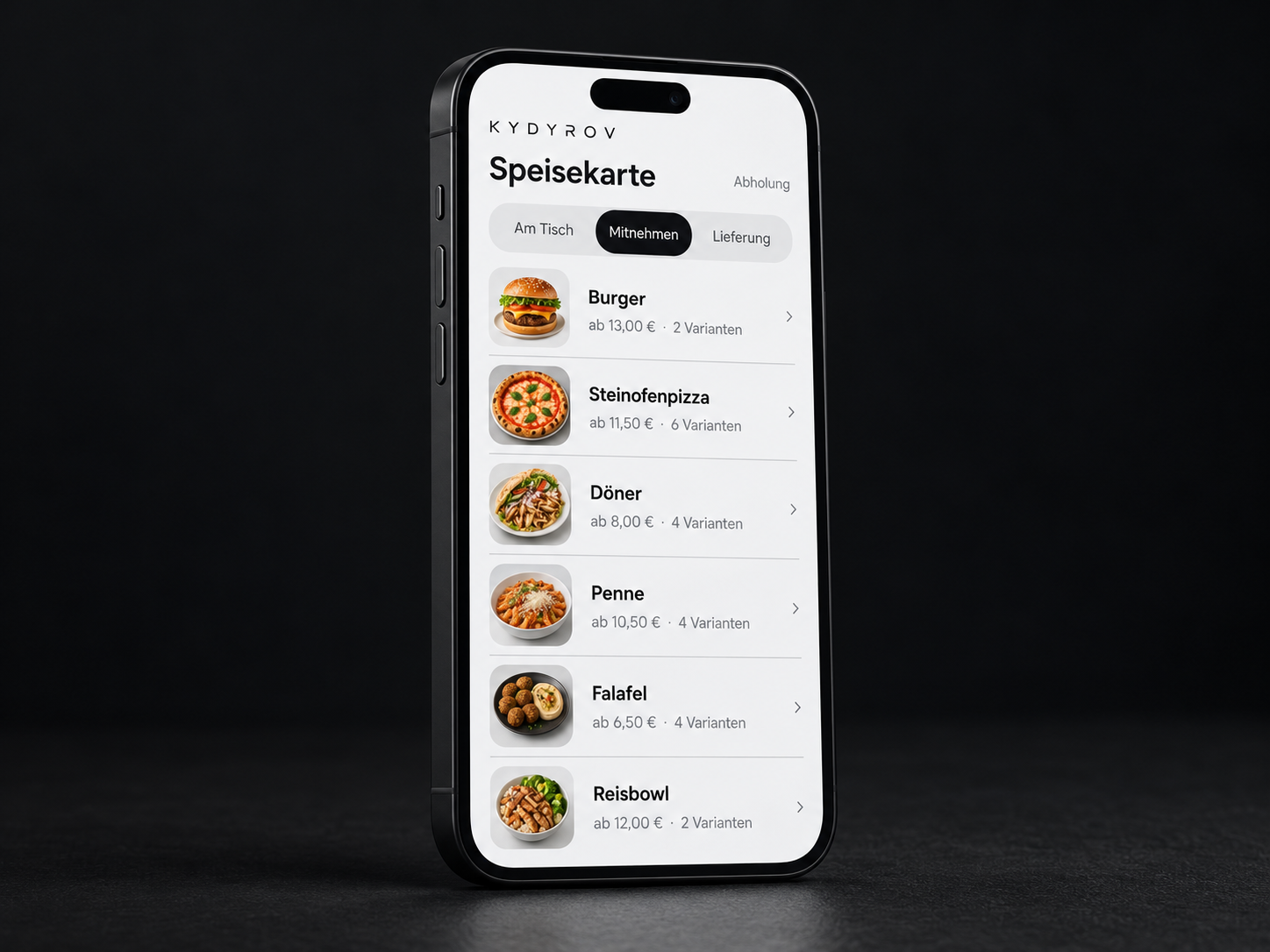
Guests order on your restaurant website for collection or delivery. A loyalty programme for regular customers is available on request.
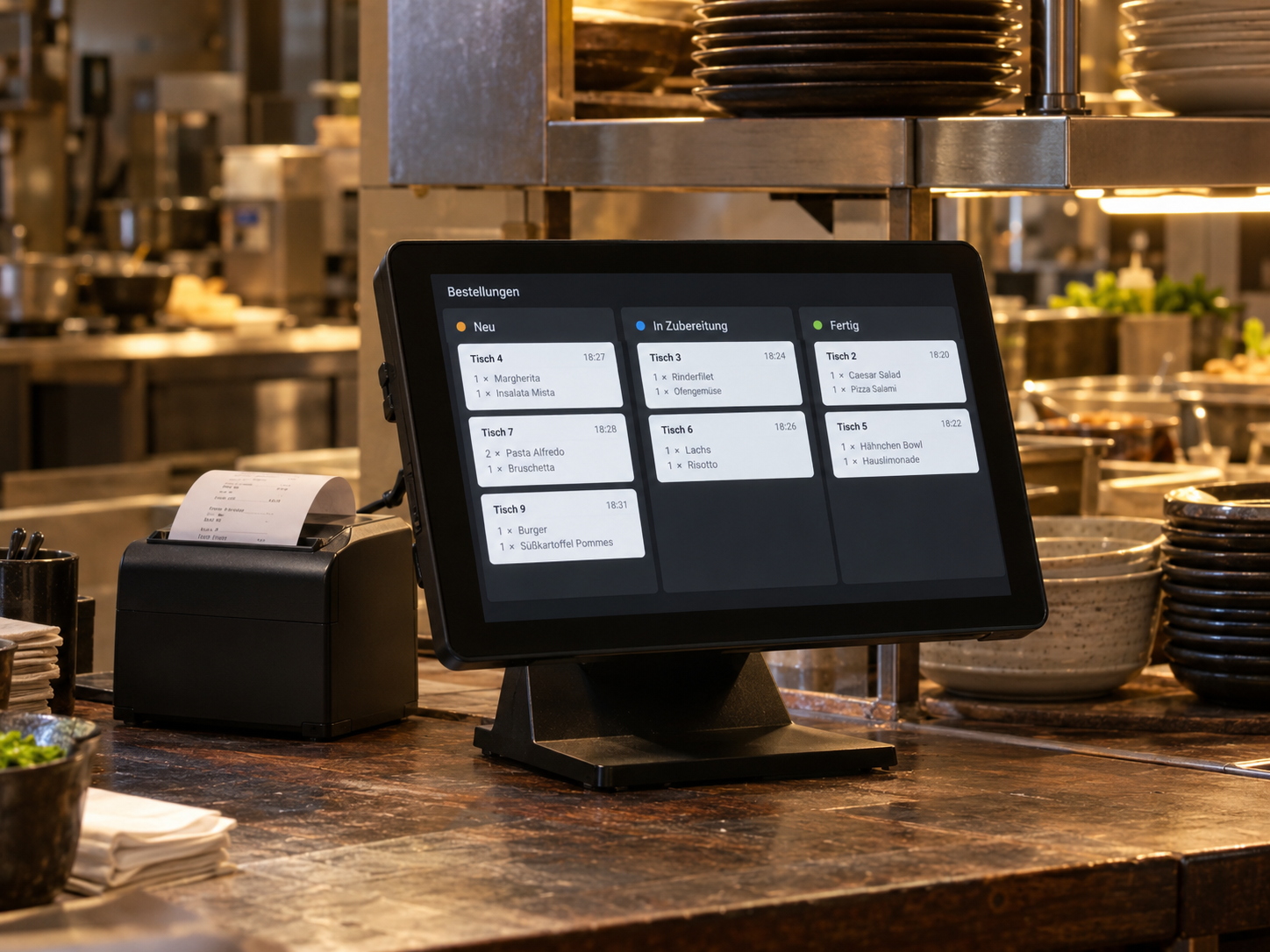
Orders come together in one place. Update prices and availability once.
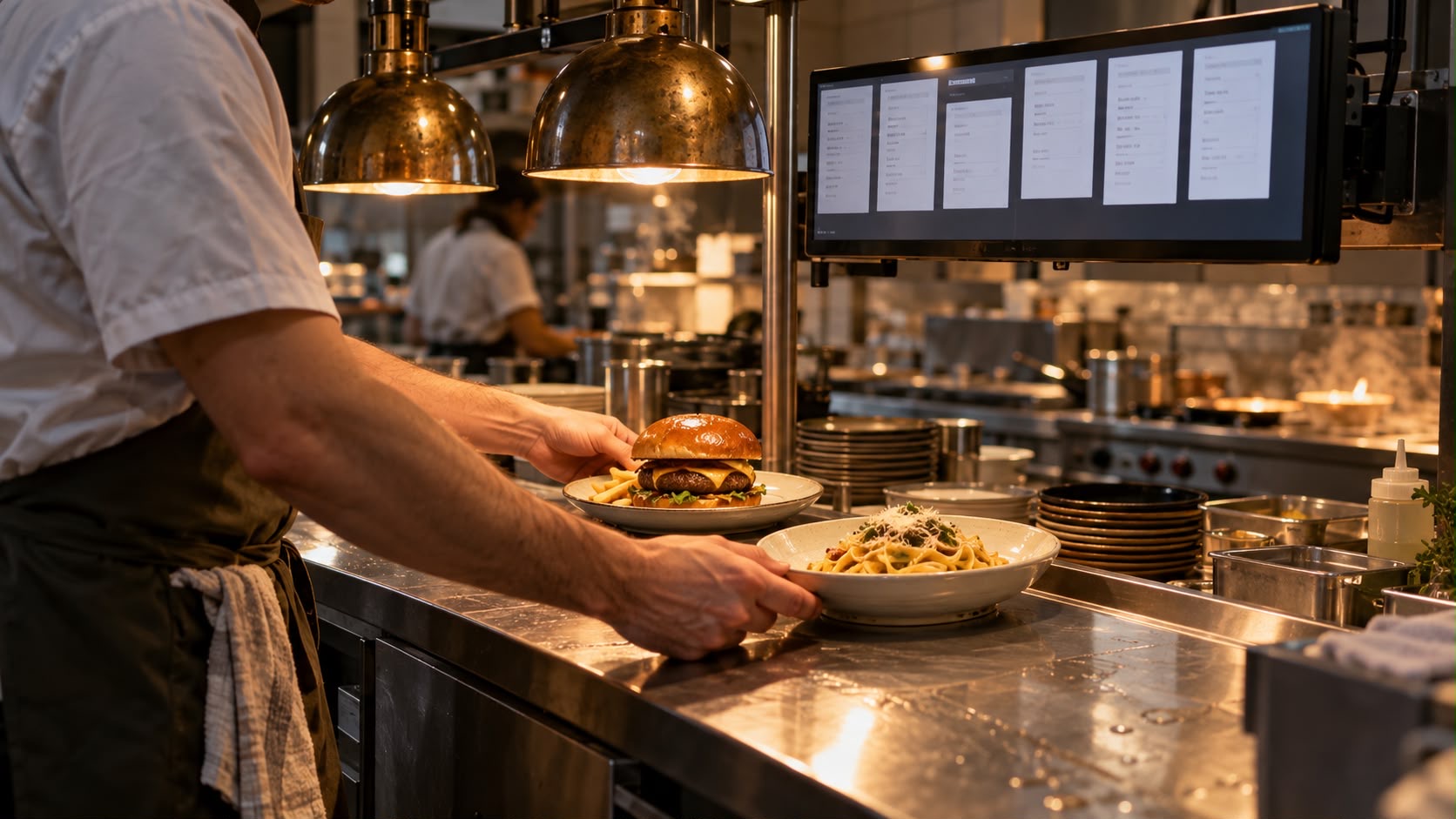
The kitchen sees every order with all its details on one screen.
The guest orders on your restaurant website.
The order arrives in the ordering system.
The kitchen prepares it and updates the status.
Your team hands it to the guest, your own driver or the connected delivery service.
We agree on the area, times, pricing rules and in-house or external delivery.
The menu, address details and handover to the kitchen and drivers are agreed.
Your team checks collection, handover and how to handle stations at full capacity.
Your own orders, delivery partners and reliable rules for your delivery area.
No. A platform brings in orders through its service; a delivery partner can handle transport. For orders placed on your own website, we clarify delivery separately. Availability, contracts, technical integration and costs need to be checked.
We include your preferred model in the plan. Handover, responsibilities and what happens when drivers are unavailable must be defined. We check whether an external service is available for your location and orders; no specific partner integration is promised here.
We need the areas you actually want to serve, along with your rules for minimum order value, delivery charges and times. Edge cases, such as an address on the boundary, are also discussed. The technical implementation of these rules is tested before launch.
Before launch, we define who accepts orders, adjusts times or temporarily pauses the ordering channel. A confirmed delivery time must match kitchen and driver capacity. The controls included in the project are explicitly agreed.
We treat ordering and later marketing as separate processes. The project defines which details are needed to fulfil the order, who can access them and how long they are stored. An optional loyalty or marketing offer is agreed separately.
Tell us about your situation. We'll work through your questions with you.